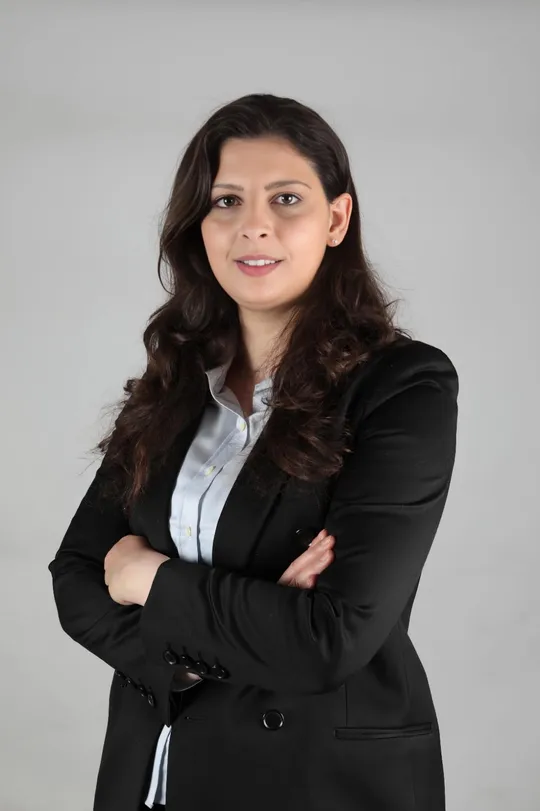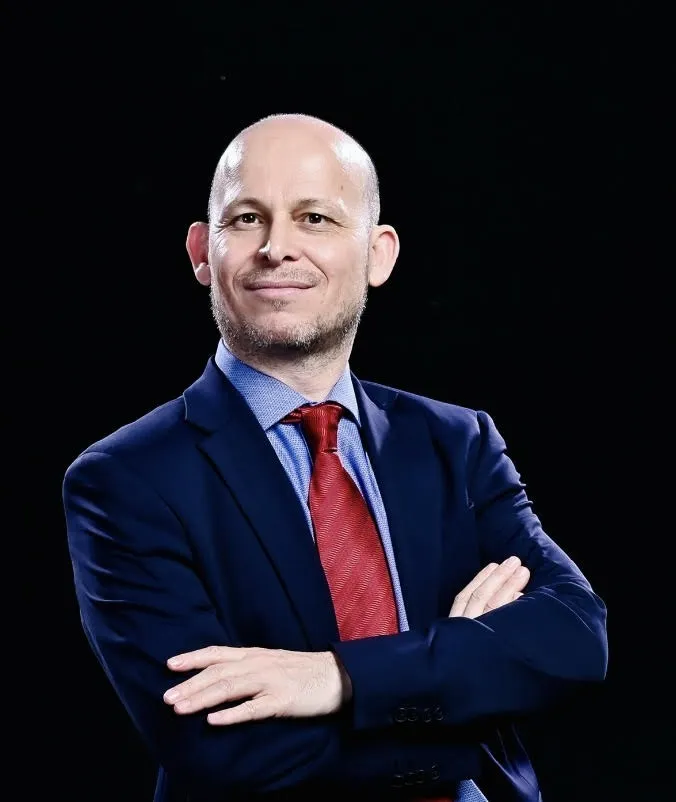
Portrait of Mathieu Guidère

Predictive linguistics and mental health

Prof.Mathieu Guidère

University Professor, Research Director at INSERM

  • Predictive linguistics
  • Mental health
  • Geopolitics of emotions
  • Cognitive warfare
  • Artificial intelligence
  • Arab world
Short address strategikia.com/guidere
  • 50+
    books published
  • 2006
    predictive linguistics founded
  • INSERM
    Research Director since 2018
01

Biography

Mathieu Guidère is a University Professor at Université Paris 8 and a Research Director at INSERM, the French national institute for health and medical research. Holding the agrégation in Arabic and a doctorate in linguistics, he founded predictive linguistics, an approach he created in 2006 at the Saint-Cyr Military Academy, where he headed the strategic information analysis unit.

After teaching at the University of Lyon, then as a full professor at the University of Geneva (2007-2011) and the University of Toulouse 2 (2011-2016), he now focuses his research on language as both a revealer and a lever of mental health: psychotraumatology, inner speech, eco-anxiety and the uses of artificial intelligence in psychiatry.

The author of more than fifty books, he was for many years a leading voice on the Arab world, Islamism and terrorism, work for which he received a Fulbright award. He is also the founder of the Swiss NGO Multilingual International Mediators (MIM).

02

Interview

Strategikia asks

In Santé mentale et relations internationales (Mental Health and International Relations, L’Harmattan, 2026), Mathieu Guidère turns mental health into a geopolitical subject in its own right. In four parts, the book traces the origins of a blind spot, maps the emotions at work in our societies, describes how rival powers exploit them, and lays the foundations for cognitive security. Strategikia asked him about this “geopolitics of emotions in the digital age”.

  1. Your book opens with the “genealogy of a blind spot”. Why has mental health been absent from the analysis of international relations for so long?

    Because the discipline was built on the idea of rational actors who calculate their interests and balances of power. Emotions were at best background noise and at worst a weakness to be eliminated. Mental health, for its part, belonged to medicine and private life, not to strategy.

    That separation no longer holds. Decisions are made by human beings, in societies shaped by fear, anger and exhaustion. Ignoring this dimension means misunderstanding an essential part of what happens between nations.

  2. You devote one chapter to the mental health of leaders and another to that of peoples. What connects them?

    A leader is not an abstraction. Chronic stress, the isolation of power or an old trauma can weigh on how threats are perceived and how decisions are made, especially in a crisis. It is a security issue, not biographical curiosity.

    But leaders also govern populations whose psychological state shapes trust, cohesion and the acceptance of political choices. An anxious or disillusioned society does not react like a confident one. The two levels constantly echo each other.

  3. The second part examines anxiety, despair, trauma, distrust, loneliness, attention and eco-anxiety. Why these emotions in particular?

    Because they are both widespread and politically active. Anxiety and eco-anxiety change our relationship with the future, despair and loneliness weaken social bonds, trauma leaves lasting marks after wars and attacks, and distrust undermines public discourse.

    Attention has a special place: it is the resource everyone is fighting over. Whoever captures attention steers emotions, and whoever steers emotions influences how reality is perceived.

  4. You write that the information space is also an emotional space. What do you mean?

    Our online searches, the content we consume and our reactions on social media leave traces. They reveal what worries us, what outrages us and what attracts us. The attention economy has been built on these emotions, because anger, fear and outrage hold attention better than nuance.

    As a result, information no longer just informs: it acts on our mental states. And whatever acts on a population’s mental states becomes, in effect, a geopolitical lever.

  5. In the third part, you discuss cognitive warfare and “weaponised pessimism”. What are they?

    Cognitive warfare targets minds rather than territory. It exploits a society’s psychological vulnerabilities, through information manipulation, to sow doubt, divide and weaken collective will. Medical and health intelligence, meaning knowledge of the health of a population or its leaders, becomes one of its tools.

    Weaponised pessimism is one of its most insidious forms: fostering the feeling that all is lost, that nothing works and that the future is closed. A society convinced of its own decline defends itself poorly. That is what I call cognitive destabilisation.

  6. How can we protect ourselves? Your final part discusses cognitive security, defence, vigilance and resilience-building.

    First, we must recognise that mental health is a matter of sovereignty. A nation that lets its population’s psychological balance deteriorate exposes itself, just as it would by neglecting its defence or its energy supply.

    Cognitive security is a matter for institutions, cognitive defence for the ability to detect and counter manipulation, and vigilance for each of us. Resilience-building, finally, means strengthening the psychological resistance of individuals and societies: learning to recognise a manufactured emotion, to step back and to protect one’s attention. It is as much a task for education as for strategy.

  7. Who is this book for?

    To public and private decision-makers, diplomats and military officers, clinicians and researchers, but also to anyone who senses that their unease about the world is not purely personal. The book sits at the crossroads of psychology and geopolitics, and that crossroads is exactly what is missing today if we are to understand our times.

03

Publications

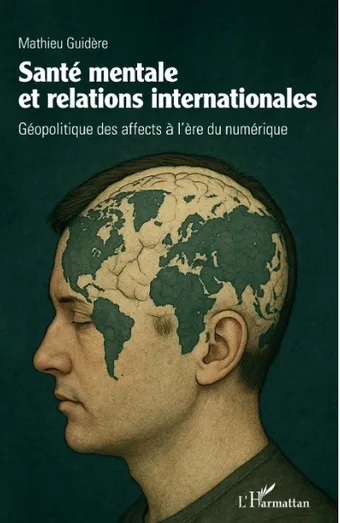
Santé mentale et relations internationales, L’Harmattan
Book

Santé mentale et relations internationales

Géopolitique des affects à l’ère du numérique
L’Harmattan · October 1, 2026 · 356 pages · ISBN 978-2-336-64916-0

Mental health has become a field of geopolitical confrontation. Linking the attention economy to power politics, the author shows how individual and collective mental health shapes threat perception, decision-making, trust and social cohesion, and how rival powers exploit these vulnerabilities through cognitive warfare and information manipulation.

Article· Published in Cercle K2

Nous sommes tous des modèles de langage ?

October 15, 2026

As artificial intelligence takes on mathematical problems once thought out of reach, the author asks how much of human intelligence is stored in language, and what remains uniquely human.

04 · Video

Predictive linguistics, its beginnings and evolution

Filmed interview with Prof. Mathieu Guidère for Strategikia.

Strategikia · YouTube · October 28, 2026

More talks

Mathieu Guidère on France 2’s “Les 4 Vérités”

France 2 · Télématin · July 18, 2016